
When it comes to volatility, most traders think of GBP/JPY or exotic emerging-market crosses. But one pair that often flies under the radar despite offering huge swings is GBP/NZD. Known for its wide ranges and rapid intraday moves, this cross is not for the faint-hearted. Yet, for traders who understand its drivers, GBP/NZD can provide outsized opportunities.
1. Why GBP/NZD Is So Volatile
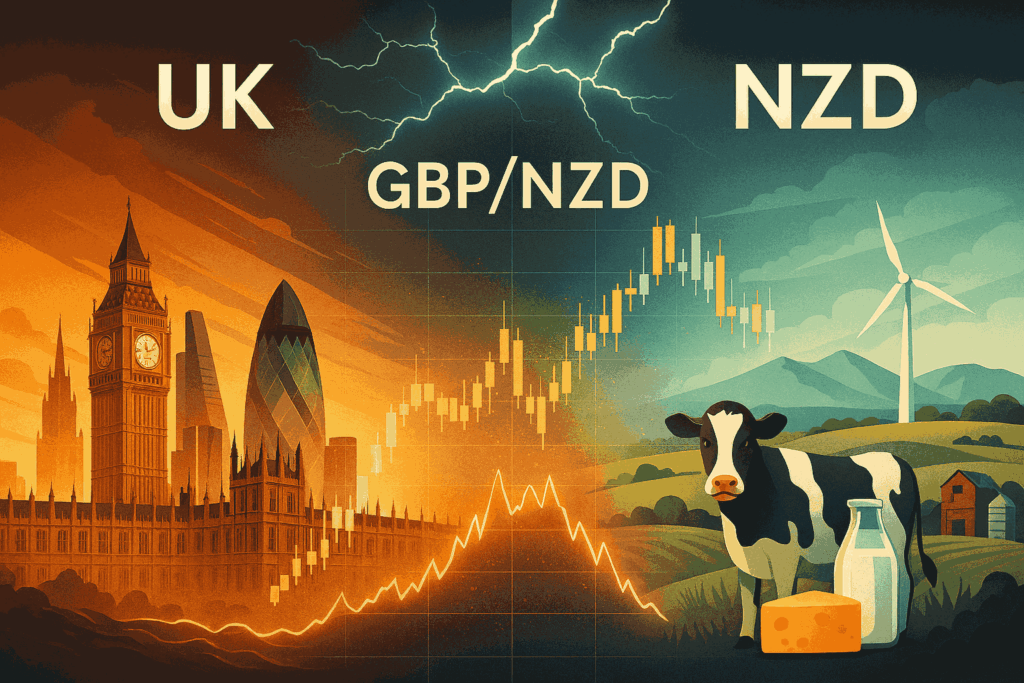
The volatility of GBP/NZD comes from the clash of two very different economies:
- The UK: A global financial hub, heavily influenced by monetary policy from the Bank of England (BoE), Brexit aftershocks, and broader European market dynamics.
- New Zealand: A smaller, commodity-driven economy where the Reserve Bank of New Zealand (RBNZ) plays an outsized role, and agricultural exports (dairy, meat, wool) shape currency flows.
This economic mismatch means:
- Moves can be exaggerated when one side has strong data while the other is quiet.
- Liquidity is thinner compared to majors, amplifying price swings.
- Daily ranges often exceed 150–200 pips, much wider than EUR/USD or GBP/USD.
2. Fundamental Drivers to Watch
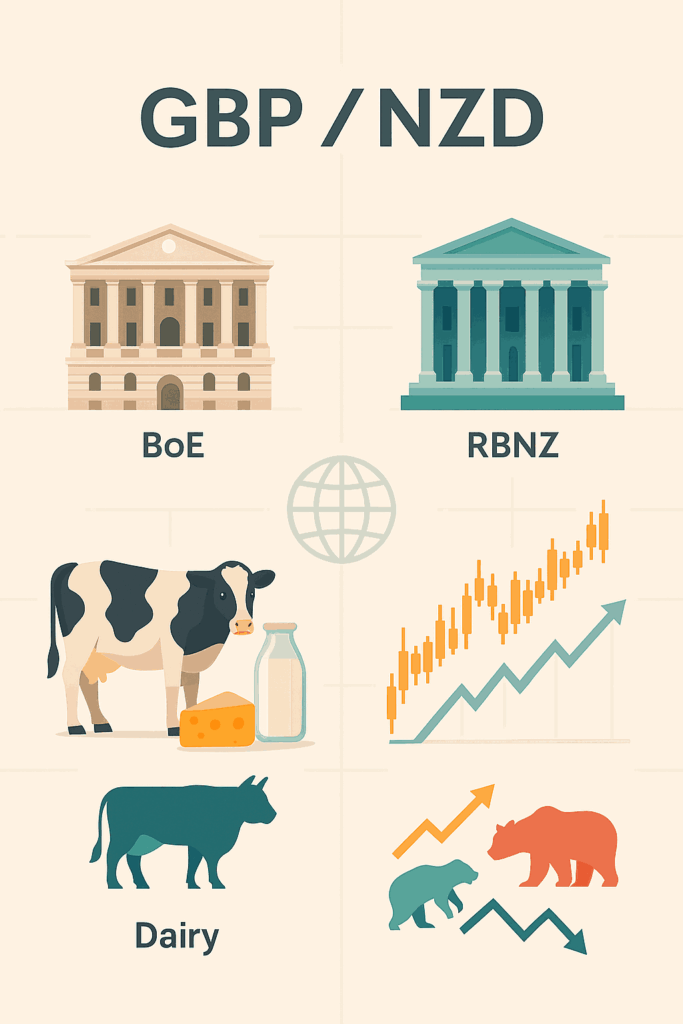
a) Interest Rate Differentials
- GBP/NZD is extremely sensitive to BoE vs RBNZ rate outlooks.
- Historically, NZD had higher yields, but shifts in UK inflation have tightened spreads.
b) Commodity Prices
- NZD strength often correlates with dairy price auctions and broader commodity cycles.
- A dip in dairy exports can weaken NZD, pushing GBP/NZD higher.
c) Risk Sentiment
- NZD is considered a risk currency; it thrives in global growth phases but weakens in risk-off events.
- GBP, being a reserve currency, tends to hold steadier creating directional swings during global risk shifts.
d) Political Noise
- UK political instability (elections, Brexit developments) can cause sudden GBP shocks.
- New Zealand’s smaller market magnifies any local political or economic surprises.
3. Trading GBP/NZD: Opportunities and Challenges

a) Big Range Trading
- Wide daily ranges allow intraday traders to capture significant moves.
- Stop-losses must be wider than with majors to avoid being shaken out.
b) Trend Exploitation
- GBP/NZD trends cleanly when fundamentals align (e.g., BoE hawkish + RBNZ dovish).
- Swing traders can capitalize on multi-hundred pip moves in a matter of days.
c) Timing the Asia–London Overlap
- Liquidity is thin during Asia (NZD reacts to local data).
- Volatility increases sharply as London opens and GBP order flow kicks in.
- Traders who time the transition often catch powerful intraday moves.
4. Risks of Trading GBP/NZD
- High volatility cuts both ways: gains can be large, but so can losses.
- Spread costs are higher than majors an important consideration for scalpers.
- Event risk is extreme: unexpected RBNZ policy shifts or UK data surprises can move the pair hundreds of pips in minutes.
- False breakouts are common due to thin liquidity during certain sessions.
5. Why Few Trade It And Why You Should Watch It
Most retail traders avoid GBP/NZD because of its wild swings and the need for larger margin buffers. But this avoidance is exactly what makes it attractive for contrarian or advanced traders. With proper risk control, GBP/NZD offers:
- High potential returns in relatively short timeframes.
- Diversification, since its drivers differ from majors like EUR/USD.
- A testing ground for strategy development in volatile environments.
Conclusion

GBP/NZD is often ignored in favor of “safer” majors, but this volatile cross is a goldmine for traders who respect its risks. By tracking interest rate spreads, commodity prices, and global sentiment, traders can turn volatility into an advantage. For those willing to step outside the mainstream, GBP/NZD offers fast-paced, high-reward opportunities that few others are exploiting.