
In the world of forex trading, most attention gravitates toward the big names EUR/USD, GBP/JPY, or even the commodity majors like AUD/USD. Yet tucked away in Northern Europe is a cross pair that quietly offers traders a distinctive blend of diversification and stability: NOK/SEK, the Norwegian krone versus the Swedish krona.
This Scandinavian cross is not only under-traded compared to global majors but also provides traders with an insightful way to hedge, diversify, and capture unique opportunities tied to energy markets and regional economic policy.
Why NOK/SEK deserves a closer look

The NOK/SEK pair reflects the economic dynamics of two closely related but fundamentally different economies:
- Norway (NOK): A resource-rich nation, heavily reliant on crude oil and natural gas exports. The Norwegian krone often moves in tandem with global oil prices, making it a classic energy-linked currency.
- Sweden (SEK): A manufacturing-driven economy with strong export ties to Europe, particularly in machinery, technology, and automotive sectors. SEK is influenced more by trade flows and European Union economic conditions.
Together, these differences create a fascinating contrast. When oil prices surge, NOK tends to outperform SEK. Conversely, during times of weaker energy demand but robust European trade, SEK often strengthens against NOK.
Oil as the swing factor
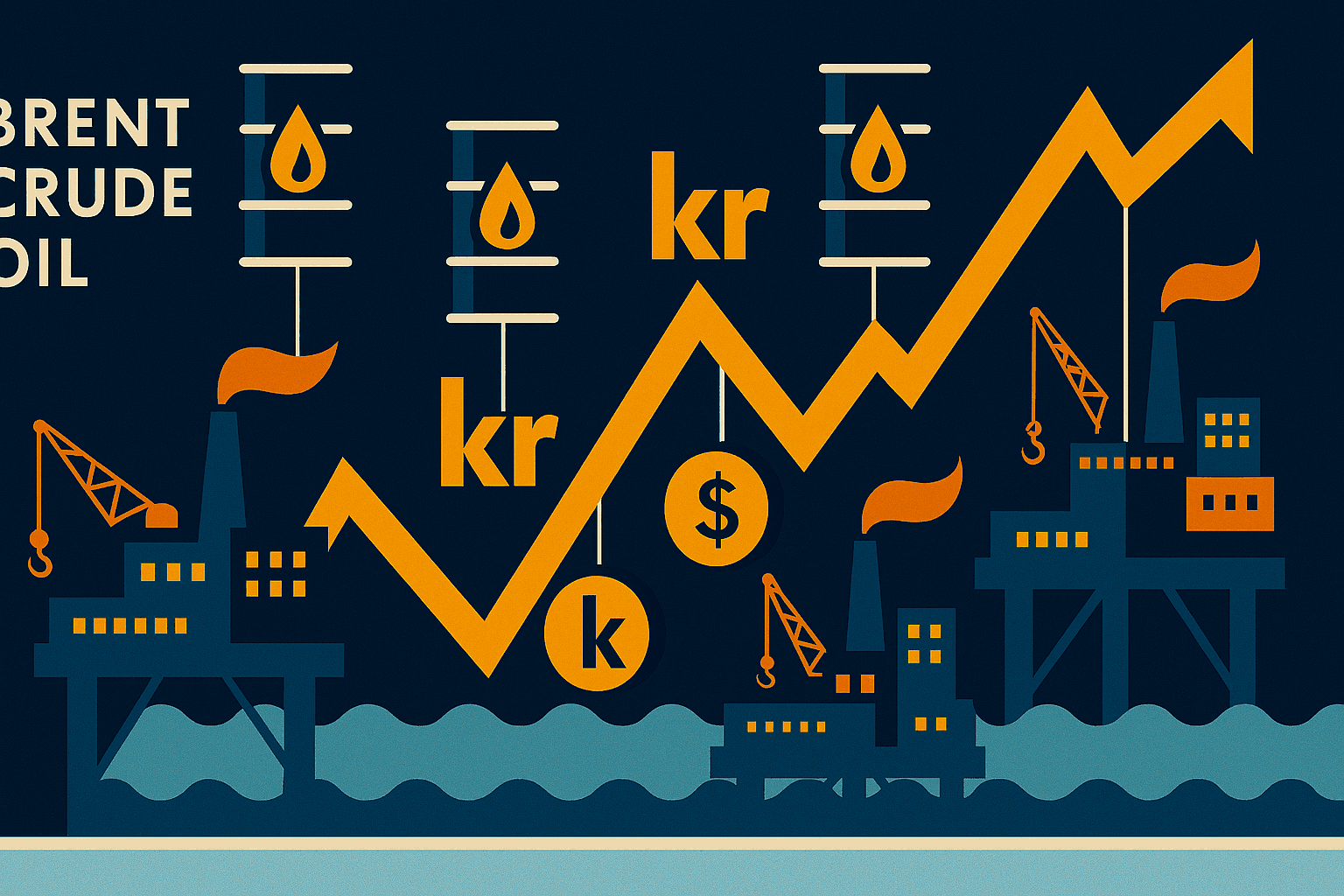
For NOK/SEK traders, oil prices often serve as the primary directional cue. Norway’s sovereign wealth fund and export revenues are tightly linked to Brent crude, making NOK sensitive to energy market volatility. For example:
- A spike in oil due to geopolitical risks often drives NOK higher, pushing NOK/SEK upward.
- Prolonged oil weakness can lead to NOK depreciation, giving SEK the upper hand.
This commodity-driven dynamic allows traders to use oil charts as a leading indicator for NOK/SEK movements.
Central banks and monetary divergence
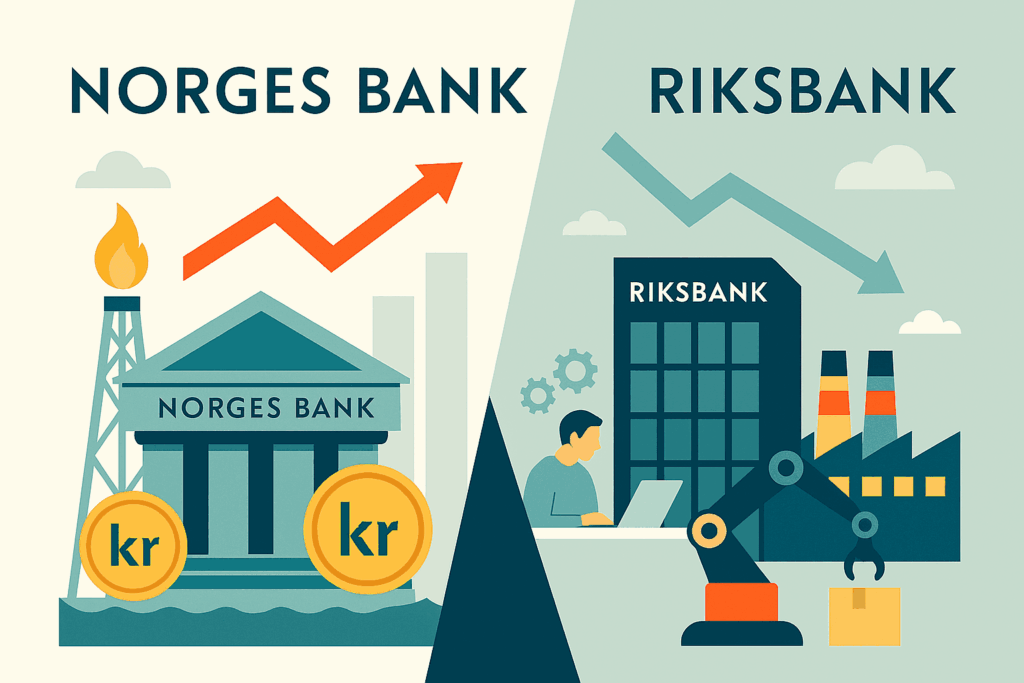
Another important driver is the monetary policy of Norges Bank (Norway’s central bank) versus Riksbank (Sweden’s central bank). While both are known for conservative, stability-oriented approaches, divergence in interest rates or inflation expectations can create attractive trading opportunities.
For instance, if Norges Bank takes a more hawkish stance due to inflationary pressures from oil revenues, NOK could strengthen relative to SEK. Conversely, if Riksbank is quicker to raise rates in response to European economic recovery, SEK may gain the upper hand.
A pair for diversification
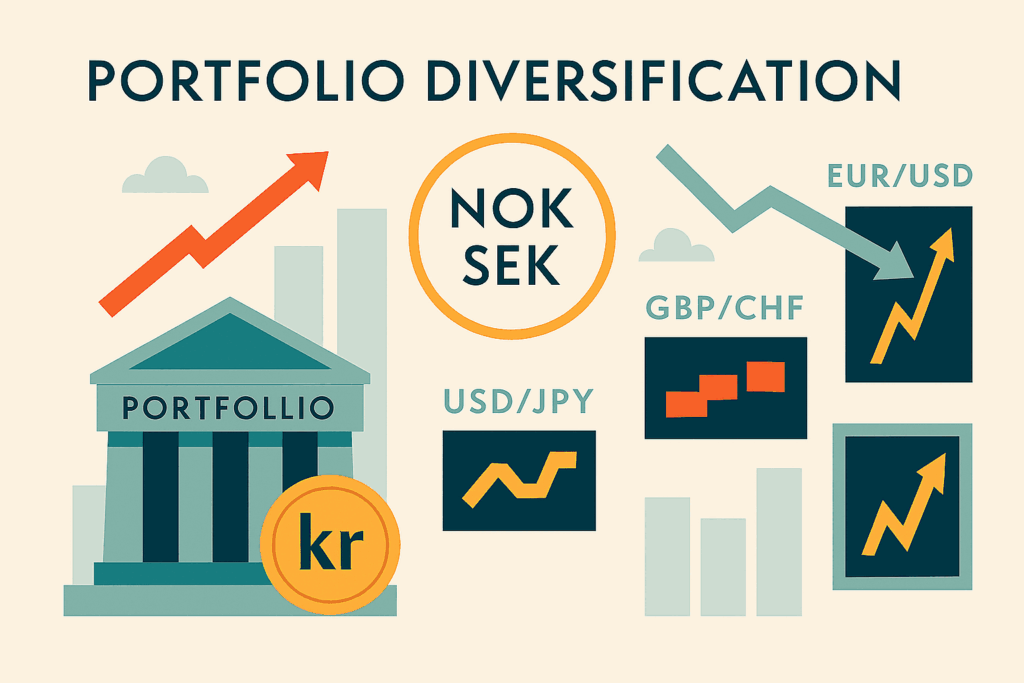
Because NOK/SEK avoids the direct influence of the U.S. dollar, it acts as a diversification tool for traders seeking exposure outside the usual USD-centric world. It’s less about speculative volatility and more about capturing macro-driven trends tied to commodities and regional stability. This makes it particularly appealing for portfolio managers and traders who want a cross that responds to unique fundamentals rather than the latest U.S. data release.
Trading NOK/SEK in practice
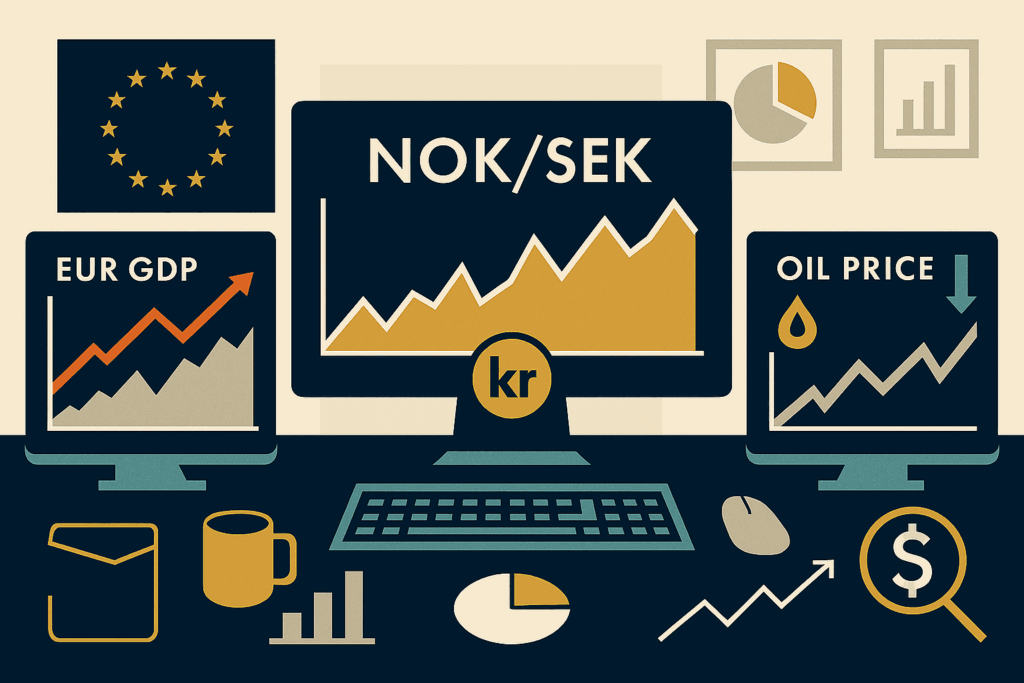
- Short-term traders often look to oil news and European data releases to anticipate volatility.
- Swing traders focus on longer commodity cycles and central bank guidance to capture sustained trends.
- Range traders benefit from NOK/SEK’s tendency to respect long-term support and resistance levels, given the relative stability of both economies.
Why it remains underrated
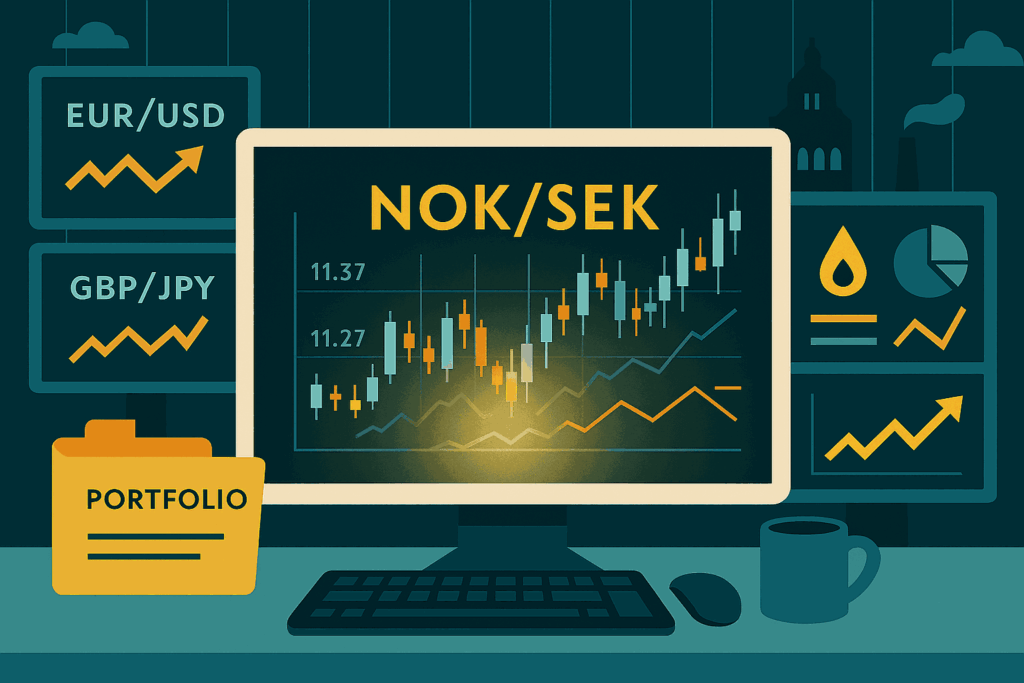
NOK/SEK may not generate the same excitement as GBP/JPY or exotic crosses, but its blend of commodity exposure, monetary policy contrast, and regional stability makes it a valuable pair for thoughtful traders. By including it in a broader strategy, traders can tap into a “Scandinavian secret” that provides true diversification in the forex landscape.