
AUD/CAD Opportunities arise when traders explore commodity-linked currencies such as the Australian dollar (AUD) and Canadian dollar (CAD), which are often mentioned but rarely compared directly to each other. Most prefer to trade them against the U.S. dollar, creating the popular AUD/USD and USD/CAD pairs. Yet the cross pair AUD/CAD offers a unique, often overlooked potential because it is heavily influenced by global commodity flows, energy trends, and risk sentiment. For traders seeking AUD/CAD opportunities, this pair can become a strategic addition to a diversified forex portfolio.
Why AUD/CAD is an “insider’s” pair
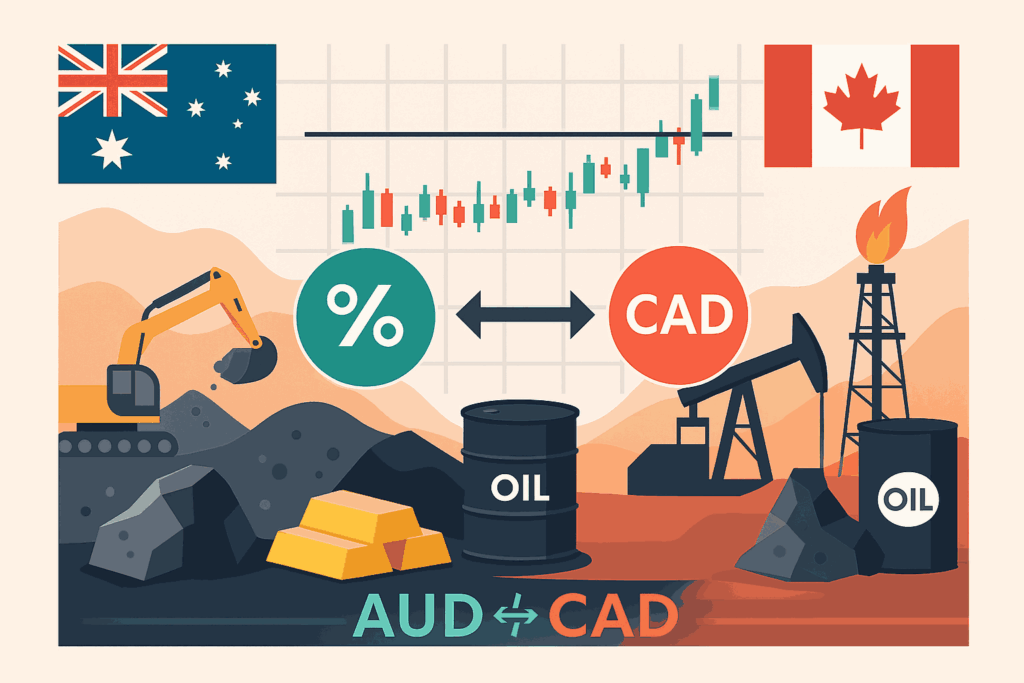
Unlike volatile majors such as GBP/JPY or EUR/USD, AUD/CAD tends to be less driven by speculative market noise and more by fundamentals. This makes it appealing to traders who want to focus on macroeconomic themes. Both Australia and Canada are resource-rich economies, but the nature of their exports differs:
- Australia: Dominated by metals and minerals, especially iron ore, coal, and gold. Its economy is closely tied to demand from China and broader Asian markets.
- Canada: Strongly dependent on oil and energy exports, with key trading ties to the U.S. and global crude markets.
This divergence in export profiles means that AUD/CAD becomes a barometer for commodity sector shifts. For instance, when oil rallies but metals soften, CAD often outperforms AUD, leading to a downward move in AUD/CAD. Conversely, booming Chinese demand for iron ore can strengthen AUD relative to CAD.
Commodity flow as a trading edge

The beauty of AUD/CAD lies in how commodity correlations can provide advanced signals. Traders who track global commodity indices, spot oil, and iron ore prices often find early indications of where this pair is headed. For example:
- Rising crude oil prices coupled with stagnant metals demand often lead to CAD strength.
- A surge in industrial metal demand (particularly from China’s infrastructure spending) usually favors AUD.
- Broad commodity cycles, such as “risk-on” booms, may create balanced but volatile swings in AUD/CAD.
By overlaying commodity price charts with AUD/CAD price action, traders can identify high-probability entries that may not be obvious in traditional USD pairs.
A cross-pair with reduced USD noise
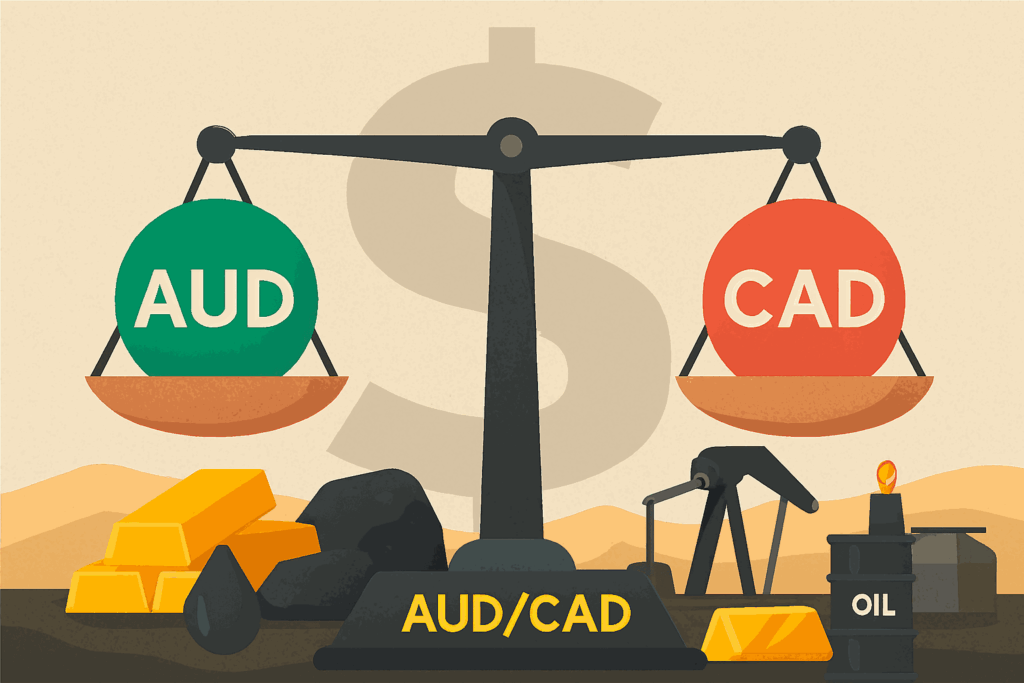
Another advantage of trading AUD/CAD is that it filters out the U.S. dollar factor. Both currencies are already heavily tied to USD flows in their primary pairs. By trading AUD/CAD directly, traders can isolate the performance of two resource economies without USD-driven distortions from Fed policy or U.S. economic releases. This makes AUD/CAD particularly valuable for traders who want purer exposure to commodity-linked trends.
Volatility and technical setups
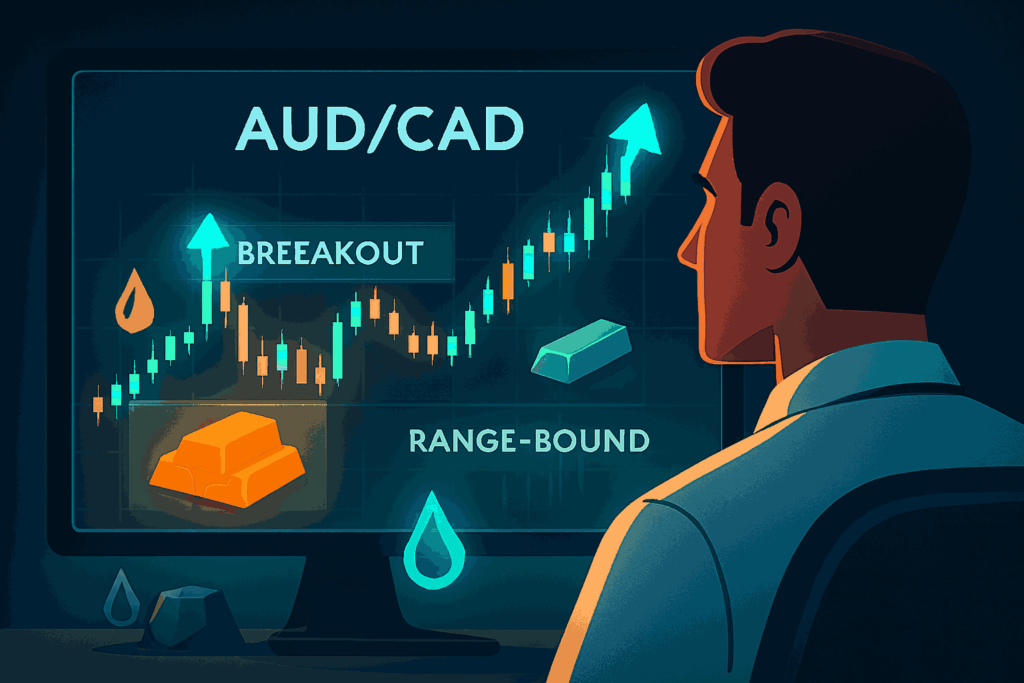
While not as volatile as exotic crosses, AUD/CAD still presents respectable intraday and swing-trading opportunities. Key trading zones often align with long-standing ranges because commodity cycles move gradually. Breakouts tend to occur when global supply-demand shocks hit one resource sector more than the other, such as oil supply disruptions or unexpected drops in iron ore demand.
Technical traders often combine commodity news with range-bound strategies, waiting for AUD/CAD to test multi-month support or resistance levels before making moves. When paired with fundamental signals, this can provide robust trading setups.
Why it remains underrated
AUD/CAD doesn’t grab headlines like EUR/USD or USD/JPY, nor does it offer the adrenaline of high-volatility exotics. But its relative stability, commodity-driven predictability, and ability to filter out USD noise make it a hidden gem for strategic traders.
For those willing to look beyond the majors, AUD/CAD offers a rare chance to exploit the push and pull of commodity flows a market dynamic often missed by traders who focus solely on dollar pairs.