
When traders think about exciting pairs, the spotlight usually falls on majors like EUR/USD, GBP/JPY, or USD/JPY. These pairs dominate discussions because of their liquidity and volatility. But why EUR/CHF is the quiet pair worth watching becomes clear when you look past the noise this often-overlooked cross offers unique advantages hidden beneath its calm surface.
1. Why EUR/CHF Stays Quiet
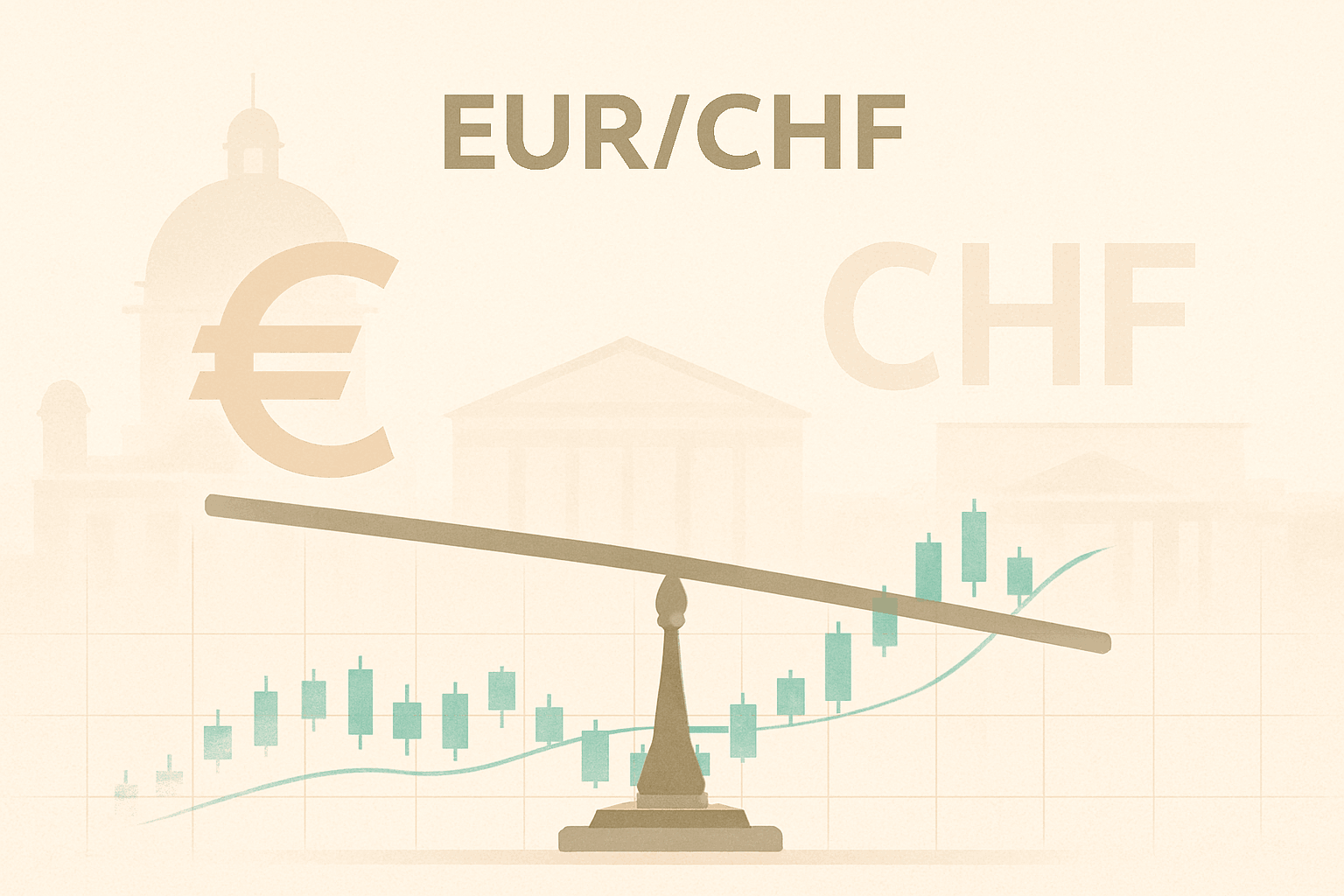
The Euro (EUR) and the Swiss Franc (CHF) both share Europe’s economic heartbeat. Their close geographical and financial ties naturally dampen extreme volatility. In normal conditions:
- Daily ranges are narrower compared to GBP or JPY pairs.
- Big moves are rare unless driven by central bank action or geopolitical shocks.
- Liquidity is steady, as both currencies are highly stable and institutionally trusted.
This is why EUR/CHF is often seen as the “boring” pair. But boring can mean predictable, and in trading, predictability is an edge.
2. The Role of the Swiss National Bank (SNB)

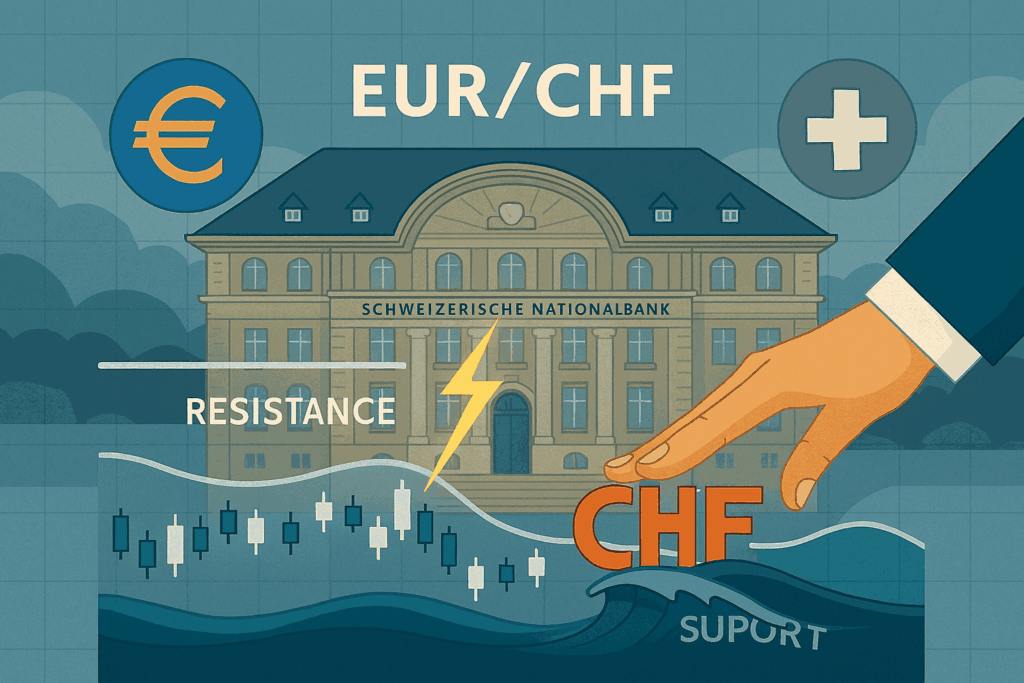
The SNB has a long history of intervening to prevent CHF from becoming too strong. A stronger Swiss Franc hurts Switzerland’s export-driven economy, so the central bank often steps in through:
- Verbal interventions (warnings to markets).
- Direct interventions (buying EUR, selling CHF).
- Rate adjustments to influence flows.
Because of this, EUR/CHF tends to respect key levels more than other pairs. Traders who monitor the SNB’s stance often anticipate market floors or ceilings before the majority reacts.
3. When EUR/CHF Becomes Exciting

Even though the pair is quiet most of the time, there are conditions where EUR/CHF comes alive:
- Global Risk-Off Events: In crises, CHF strengthens as a safe-haven, pushing EUR/CHF lower.
- Eurozone Stress: Political or debt-related issues in the EU weaken the Euro.
- SNB Shocks: Sudden interventions, like the infamous 2015 SNB floor removal, can send the pair flying.
For traders who thrive on “slow and steady,” EUR/CHF offers manageable opportunities. For those who like surprises, it occasionally delivers some of the market’s biggest shocks.
4. Trading Strategies for EUR/CHF
a) Range Trading
- Since EUR/CHF often respects support/resistance, range strategies work well.
- Bollinger Bands or RSI-based mean-reversion systems can be effective.
b) Safe-Haven Tracking
- Track global risk sentiment: when fear rises, CHF usually gains.
- Use indices like the VIX or bond yields as leading indicators.
c) Central Bank Reaction Trading
- Keep an eye on ECB and SNB policies.
- Align trades with interest rate outlooks and intervention patterns.
5. Why EUR/CHF Deserves a Spot on Your Radar
- Low Noise: Less whipsawing compared to volatile pairs.
- Predictable Behavior: Respect for ranges and fundamentals.
- Diversification: Trading EUR/CHF can balance a portfolio full of high-volatility majors.
- Safe-Haven Insight: Watching CHF flows provides clues about broader risk sentiment in global markets.
Conclusion

EUR/CHF may not be the star of the forex stage, but it’s the kind of pair professionals quietly monitor to gauge stability, risk flows, and central bank influence. For traders seeking measured opportunities rather than roller-coaster swings, EUR/CHF is a pair worth watching. Sometimes the quietest markets whisper the clearest signals and that’s what makes EUR/CHF an underrated gem in the forex world.