
In the fast-paced world of forex trading, liquidity is everything. Prices don’t just move because of random buying and selling they move because liquidity is found, taken, and then redistributed. Professional traders, including banks and institutions, know this well. They focus less on indicators and more on liquidity zones areas on the chart where large clusters of orders sit, waiting to be triggered. For retail traders, learning to spot and trade around these zones can be the difference between chasing false breakouts and consistently catching high-probability setups.
1. What Are Liquidity Zones?
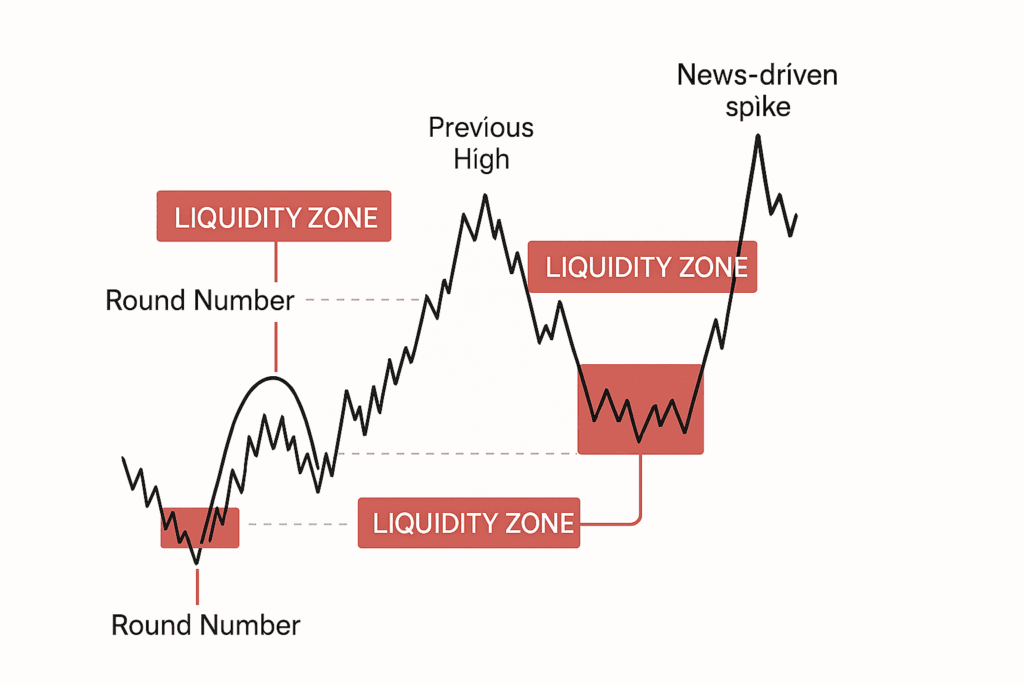
Liquidity zones are areas on a price chart where market participants have stacked significant buy or sell orders. They usually form around:
- Round numbers (like 1.2000, 1.2500)
- Previous highs and lows
- Support and resistance levels
- News-driven price spikes
When price reaches these zones, large amounts of liquidity are available, which means tighter spreads and sharper moves ideal conditions for scalping or short-term trades.
2. Why Banks Love Them
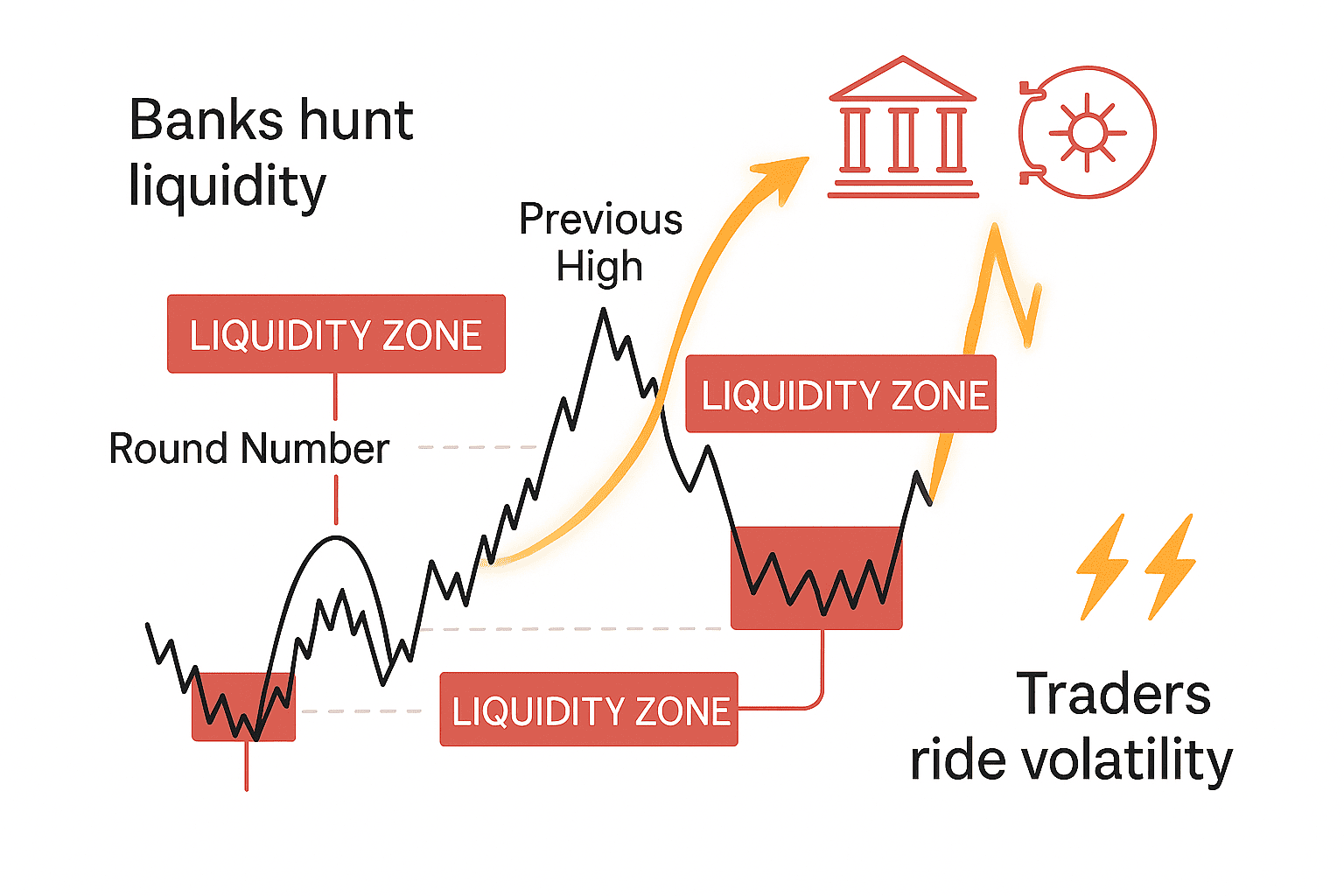
Banks and institutional traders hunt liquidity because it allows them to enter or exit massive positions without disrupting the market too much. For them, a liquidity zone is like a safe harbour, it ensures their orders get filled quickly. But it also creates opportunities for fast-moving traders who can ride the volatility that follows when liquidity is absorbed.
3. How Retail Traders Can Spot Them
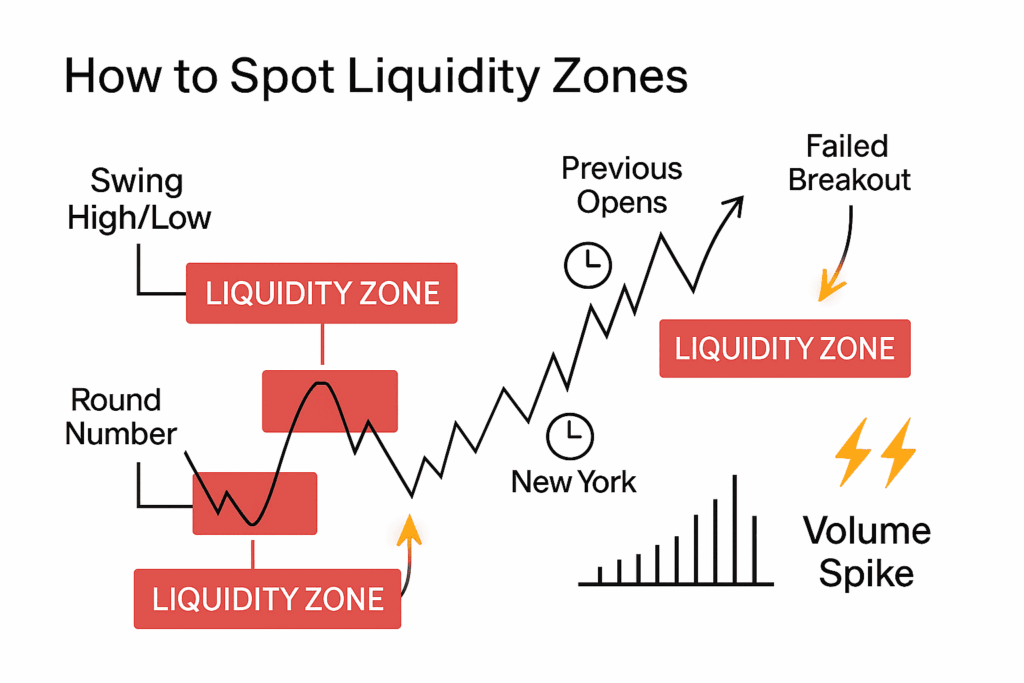
While retail traders don’t have access to the same order flow tools that banks do, there are simple ways to identify liquidity zones:
- Mark recent swing highs/lows – These often hold clusters of stops.
- Watch session opens (London, New York) – Liquidity typically spikes.
- Look for failed breakouts – They often reveal hidden liquidity pockets.
- Volume spikes on intraday charts – A tell-tale sign of big players stepping in.
4. Trading Strategies Around Liquidity Zones
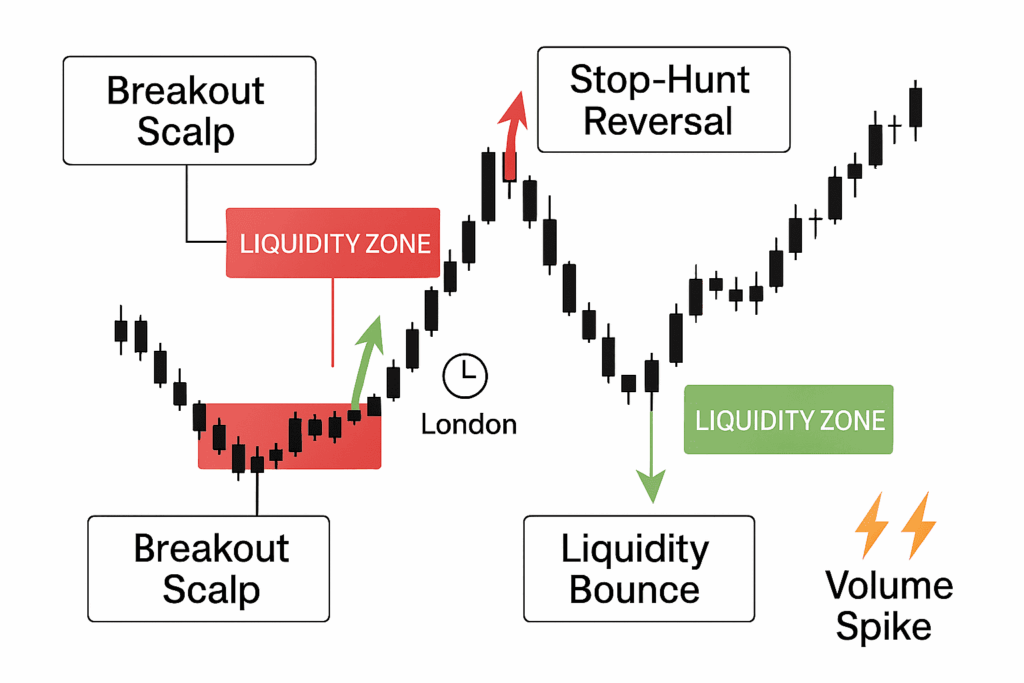
Once identified, liquidity zones can be used in multiple ways:
- Breakout Scalps: Enter trades right after liquidity gets cleared and momentum takes over.
- Stop-Hunt Reversals: Wait for price to “grab” liquidity above/below a key level, then trade the reversal back into the range.
- Liquidity Bounces: When a strong zone holds price, scalp the quick reaction moves.
The trick is to watch how price behaves when it reaches the zone. Speed, volume, and rejection candles all give clues.
5. Risk Management Within Zones
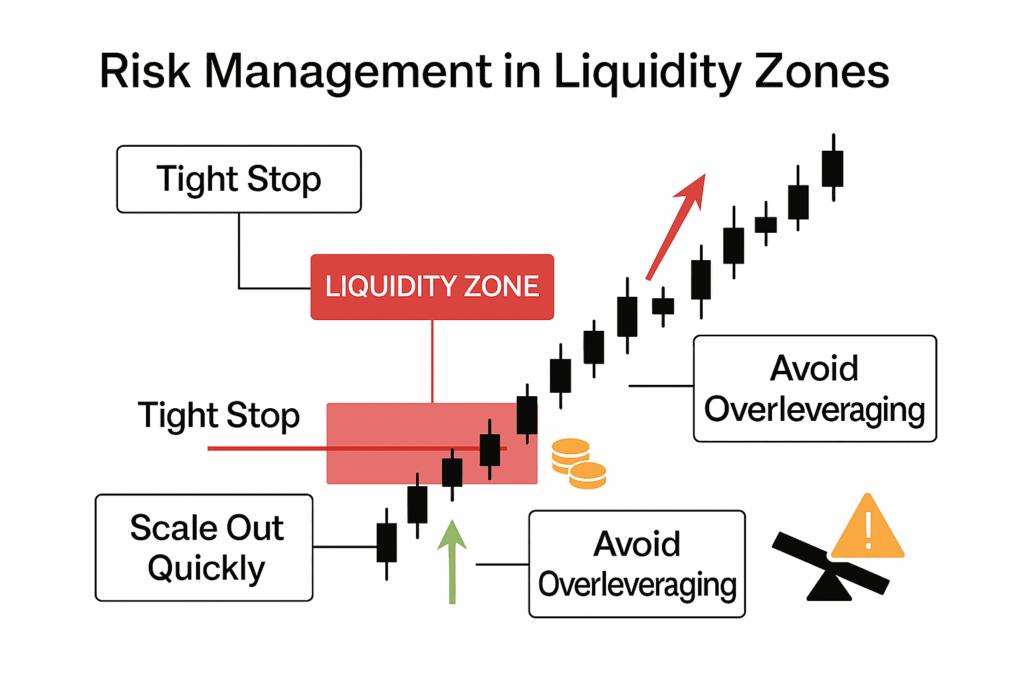
Liquidity attracts volatility, which means both opportunity and danger. Smart traders treat these zones as decision points, not guarantees. That means:
- Using tight stops (just beyond the zone).
- Scaling out quickly once the market reacts.
- Avoiding overleveraging, since liquidity grabs can whipsaw price before the real move begins.
6. The Secret Weapon Mindset
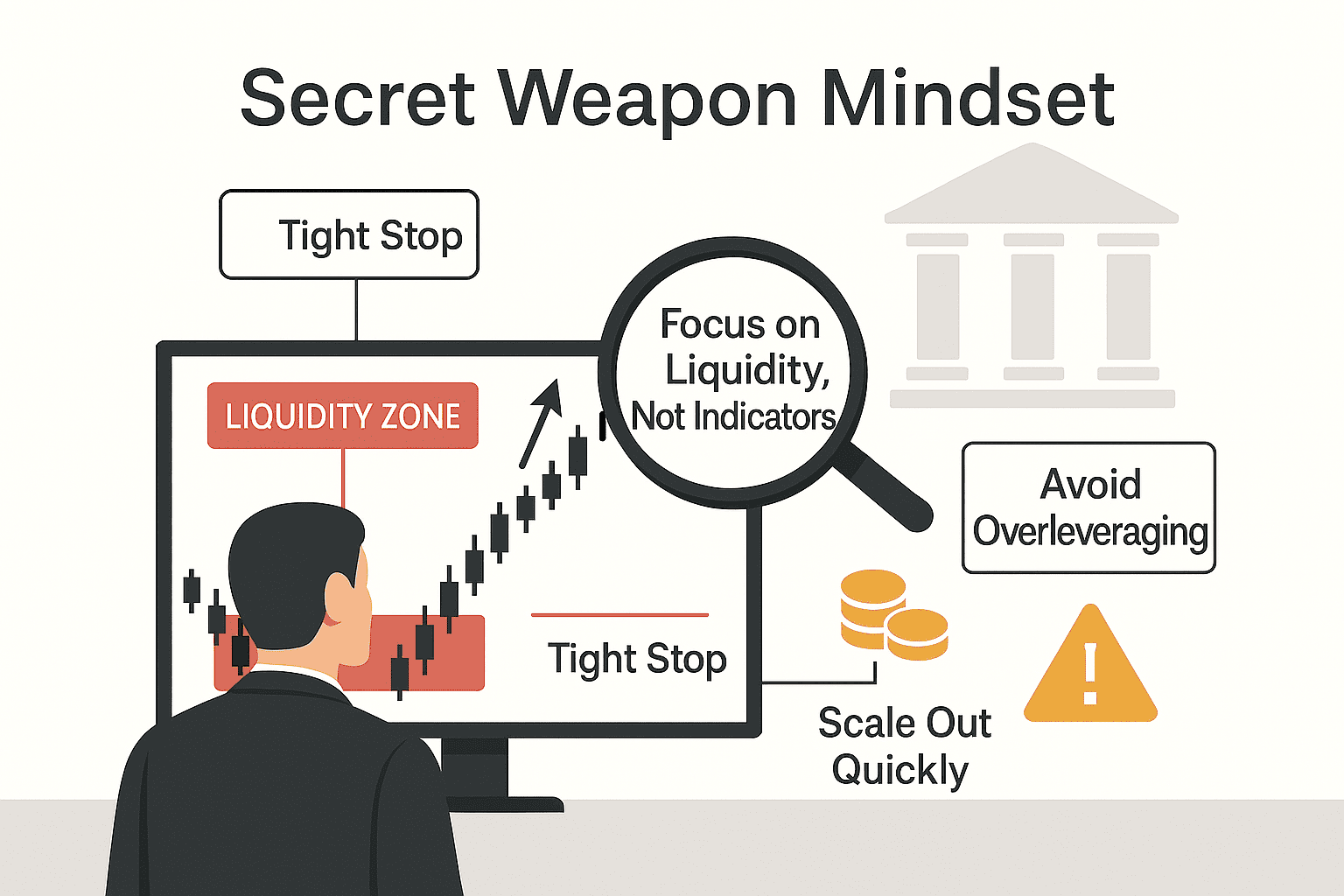
Most retail traders focus on indicators, chasing lagging signals. Professional traders flip the script: they focus on where liquidity is hiding, then align trades with the order flow. The power of liquidity zones isn’t just about better entries, it’s about seeing the market through the lens of the big players. Once you train your eyes to spot them, you’ll never look at charts the same way again.
Conclusion
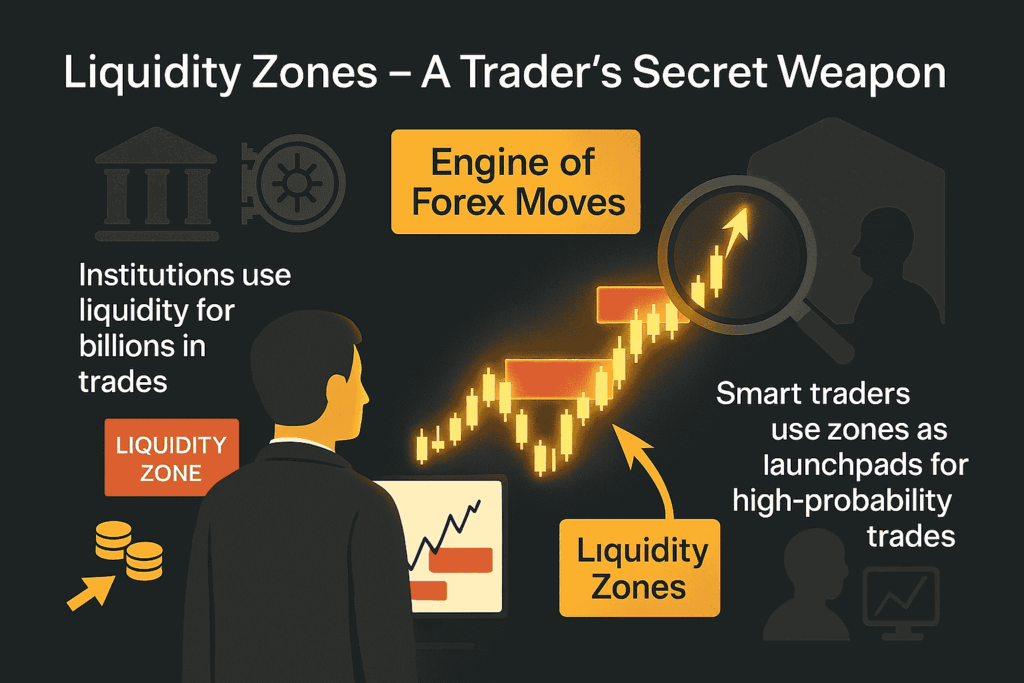
Liquidity zones are not just another tool they are the engine that drives short-term forex moves. Banks use them to execute billions, and smart traders use them as launchpads for high-probability trades. By mapping out where liquidity lies, waiting for price to engage, and managing risk with discipline, traders can turn these hidden areas into a true secret weapon.