
Most traders focus on big-picture tools trendlines, candlestick patterns, or indicators like RSI and MACD. While these can provide general direction, professional scalpers and institutional traders know that the real edge lies in the overlooked market microstructures. Timing entries with these microstructures allows traders to reduce noise, enter trades with precision, and capture moves before the majority of retail traders even react.
1. What Are Market Microstructures?

Market microstructure refers to the fine details of how orders flow, spreads widen or contract, and price interacts with liquidity at a granular level. Unlike higher-timeframe strategies, microstructure analysis digs into the “plumbing” of the market, including:
- Bid-ask dynamics – watching spreads tighten or widen.
- Order clustering – areas where many small orders get stacked.
- Micro price patterns – quick rejections, fake-outs, or one-tick grabs.
- Session transitions – how order books shift between Asia, London, and New York.
These elements don’t usually appear in textbooks, but they are critical for scalping and precise entries.
2. Why Microstructures Matter for Entries

When trading at the intraday or scalping level, a few pips can mean the difference between a winning and losing trade. Overlooked microstructures can reveal:
- When liquidity is about to enter (like right before a news release).
- Whether a breakout is genuine or a stop-hunt trap.
- When spreads compress a signal that big players are lining up to trade.
Instead of waiting for lagging confirmation, traders can use these signals to front-run moves with confidence.
3. Examples of Overlooked Microstructures
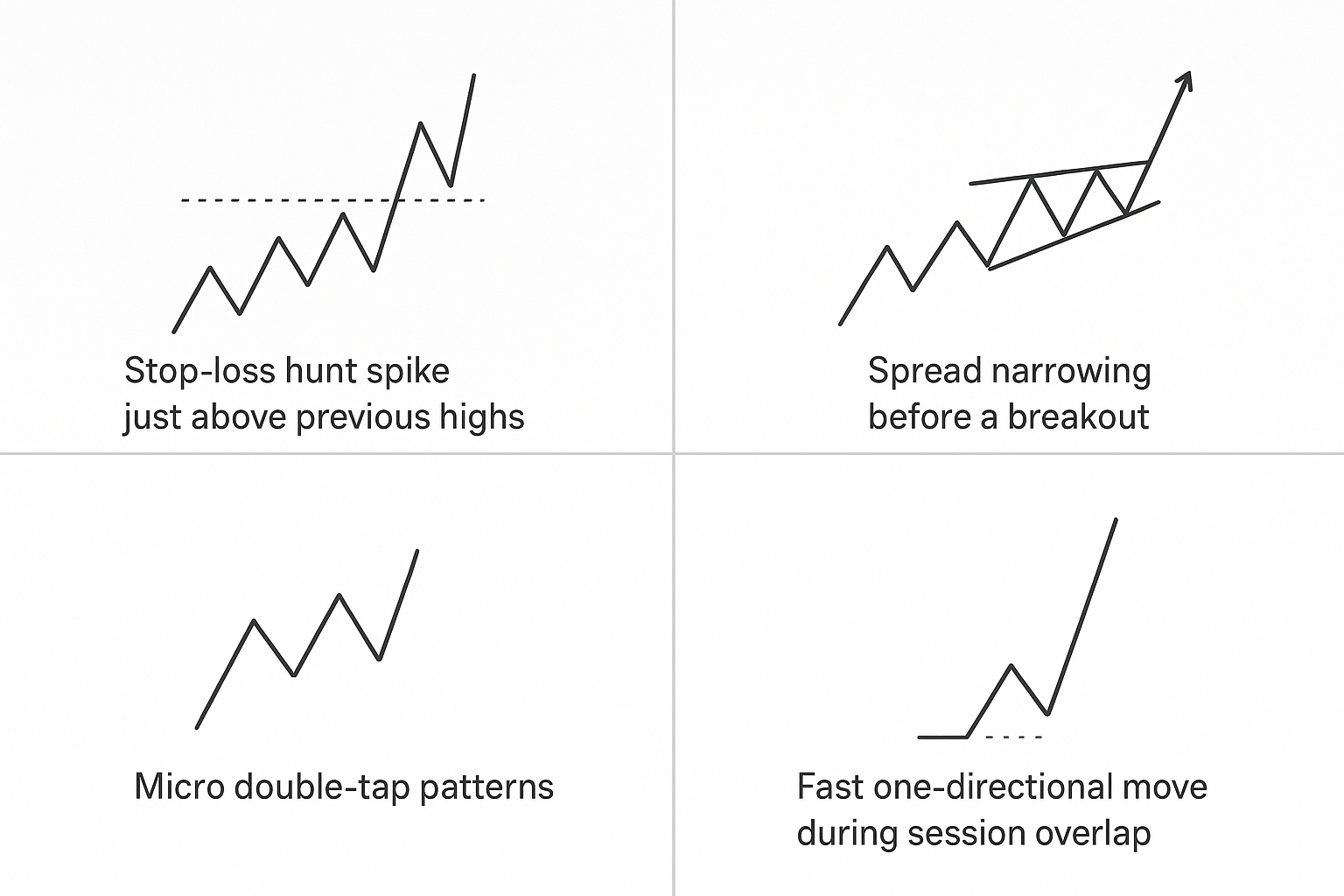
Here are some overlooked but powerful patterns:
- Stop-Loss Clusters: Just above previous highs or lows, where price often spikes before reversing.
- Spread Narrowing: A sudden tightening of spreads often signals incoming volatility.
- Micro Double-Taps: Price testing the same level within seconds or minutes, often hinting at a liquidity grab.
- Session Overlaps: At London/New York overlap, hidden liquidity often sparks fast one-directional moves.
4. How to Trade with Microstructure Timing
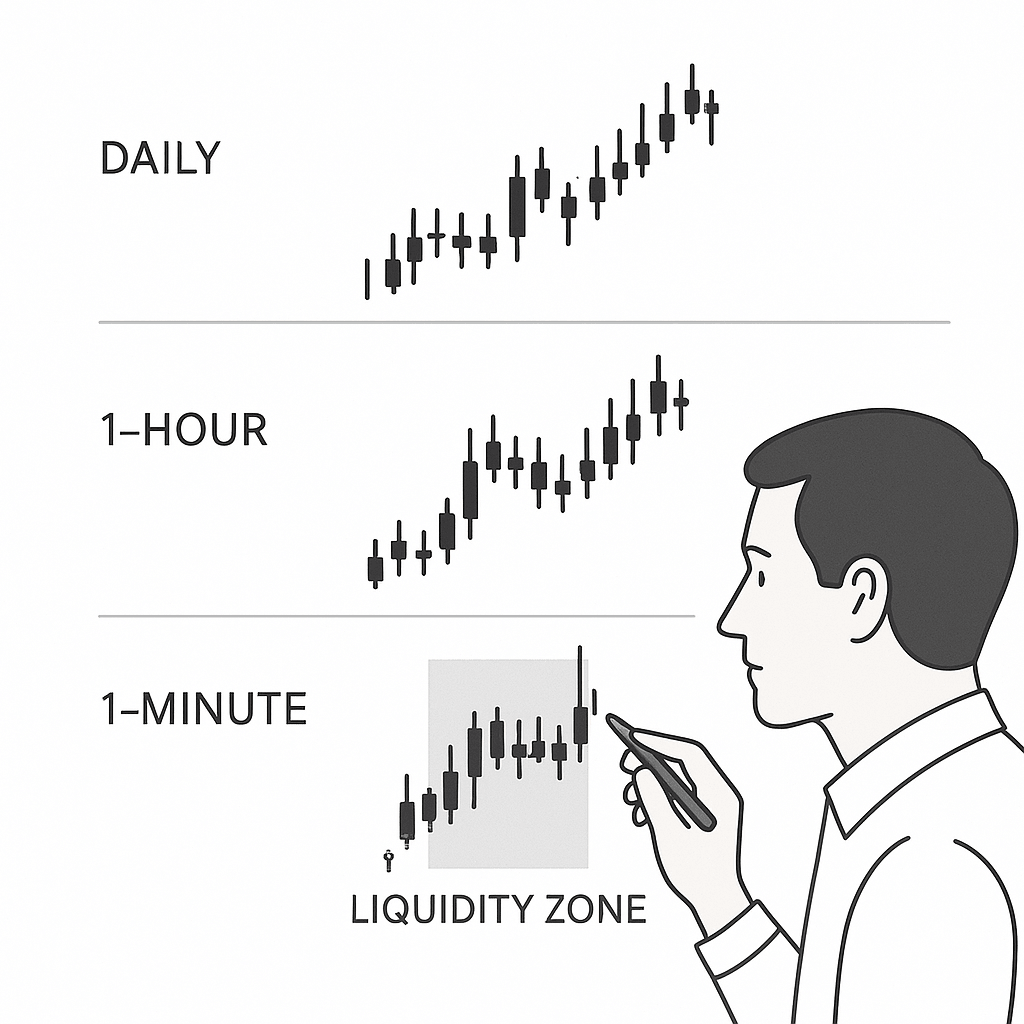
- Step 1: Identify the zone. Use higher timeframes to locate liquidity areas (support/resistance, round numbers).
- Step 2: Zoom in. Watch the 1-minute or tick chart for microstructure clues (spreads, stop grabs).
- Step 3: Execute fast. Don’t wait for lagging indicators; entries should be taken at the micro-level with tight stops.
- Step 4: Manage risk. Because microstructure trades are scalps, quick partial exits lock in profits.
5. The Institutional Angle

Banks and HFT (high-frequency trading) firms operate almost entirely on microstructure signals. Their algorithms are designed to detect shifts in spreads, order book pressure, and hidden liquidity. While retail traders don’t have access to the same depth of order flow, even observing basic spread dynamics and price reaction speed can replicate a fraction of that edge.
6. Mindset for Microstructure Trading

Trading microstructures requires patience and discipline. Not every price flicker matters what counts is identifying when the micro details align with your broader trade idea. It’s about marrying macro direction (trend, news, bias) with micro precision (exact entry timing).
Conclusion
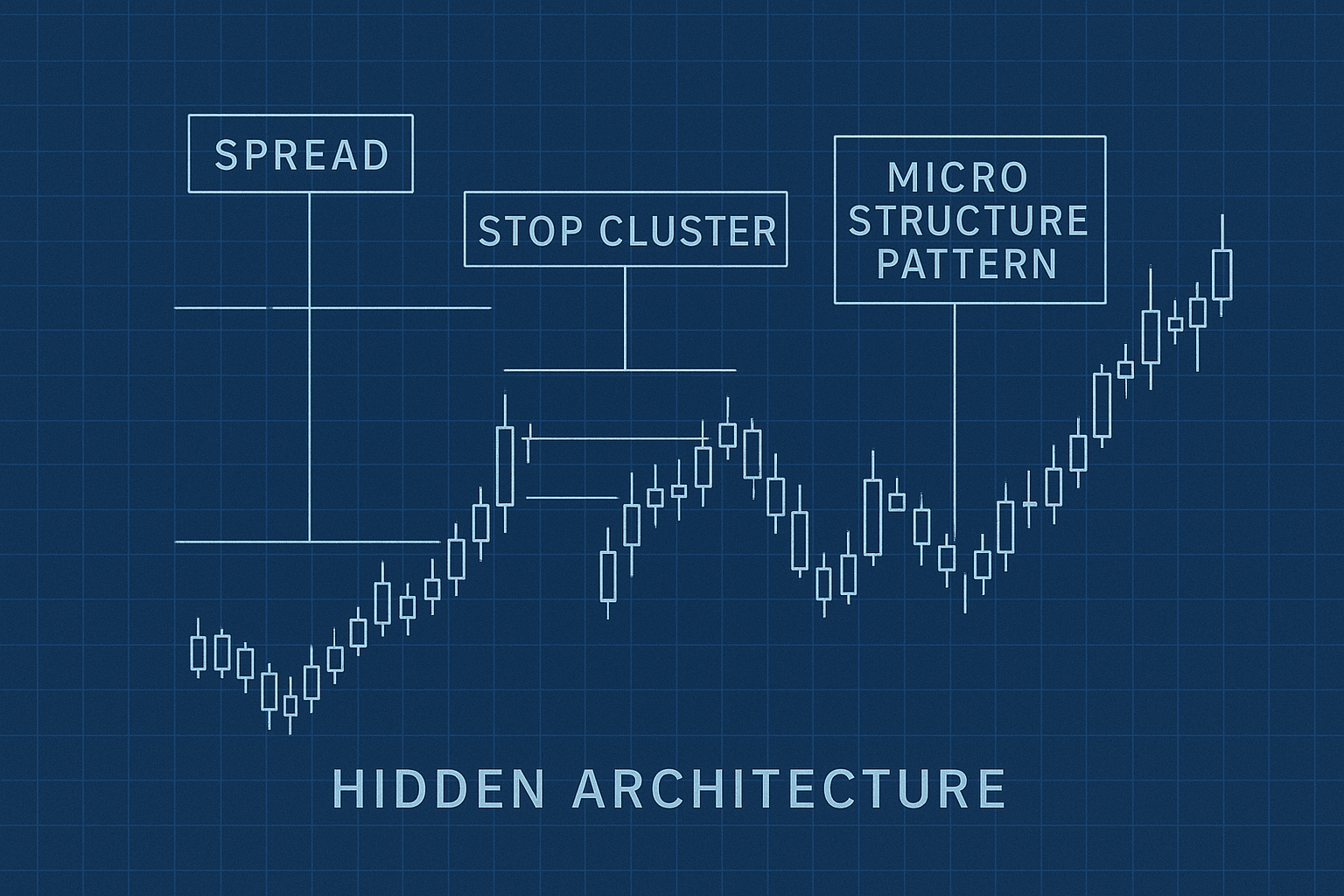
Most traders ignore market microstructures, focusing only on big technical patterns. But the secret to sharper entries lies in these overlooked details. By studying spread behavior, stop clusters, and liquidity reactions, traders can anticipate moves instead of reacting late. In a fast-moving forex environment, precision timing is a competitive edge and microstructures are the secret blueprint.